School purchasing works best when the brief starts with users and activities, then moves to exact SKUs, storage, documents and replenishment. Piece count alone is not a classroom plan, and a supplier’s general claim is not a model-specific record.
Define the learning and operating context
- How many learners use the sets at one time?
- Will the sets support free build, guided activities, geometry or themed storytelling?
- Where will pieces be counted, cleaned, stored and replenished?
- Which staff member owns the approval and the missing-information log?
Shortlist an activity reference, then run a supervised pilot
Two catalog references illustrate different procurement tasks. MBP-069 is listed as a 60PCS magnetic tile STEAM set; MBP-015 is listed as a 42PCS space-theme magnetic tile set. The following are candidates to evaluate, not an assertion that either model is suitable for every school, age group or learning outcome.
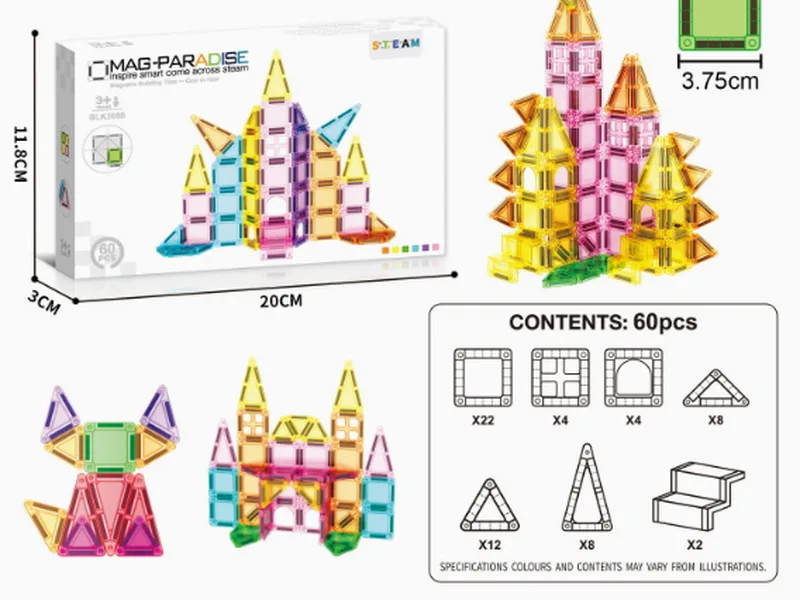
60PCS Magnetic Tiles STEAM Set
MBP-069 · Candidate for a geometric building pilot. Use the current sample to check available shapes, instructions and pack-up workload.
View product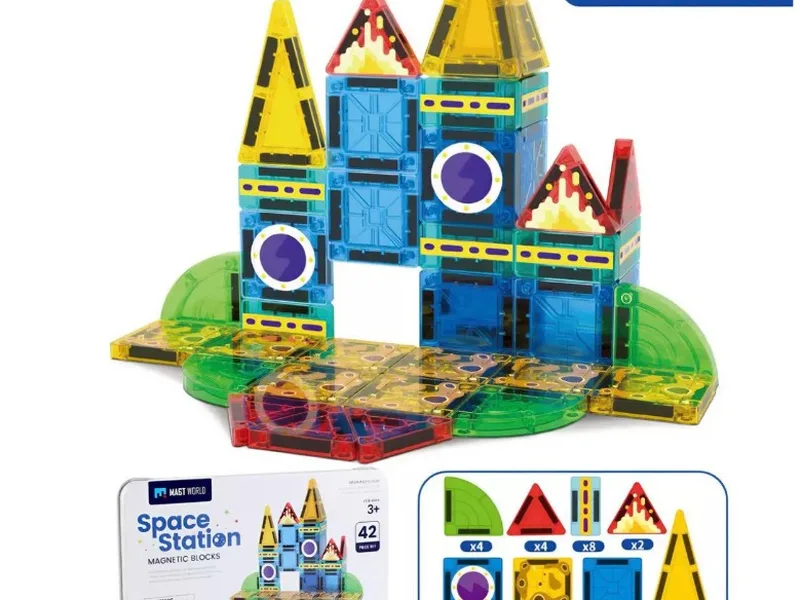
Magnetic Tiles Space Theme (42pcs)
MBP-015 · Candidate for a space-storytelling pilot. Confirm the actual themed contents and instructions before planning an activity.
View productDo not infer classroom capacity from 60 versus 42 pieces. A single build may require repeated squares or specific connectors that the total count hides. A themed activity may need a different distribution of pieces. Ask for the component breakdown and pilot with the intended group and staff supervision only after suitability is confirmed.
Record use, reset and replenishment separately
For each shortlisted reference, plan an activity prompt, the staff supervision arrangements, a piece-return routine and a storage location. During the pilot, observe whether the supplied contents support the intended activity, whether staff can reconcile the pieces at pack-up, and which questions the instructions leave unanswered. These observations inform purchasing; they are not evidence of guaranteed educational gains.
Keep complete SKU inventories separately until product compatibility and any mixed-use arrangement are confirmed. Looking similar does not establish that pieces from different sets can be treated as one system. Avoid combining classroom kits before the contents and replacement route are known.
| Decision area | Questions to answer | Evidence to retain |
|---|---|---|
| Set role | What activity does this SKU support? | SKU, contents list and approved sample |
| Group use | How many users and how many simultaneous builds? | Classroom plan and quantity logic |
| Storage | How are pieces counted and returned? | Container, label and replenishment process |
| Documents | What applies to this market and model? | Model-matched evidence and coverage notes |
| Operations | How will the school reorder or replace missing pieces? | SKU-level order and reorder record |
Complete an education pilot record
SKU and sample version: [ ]. Intended learners and confirmed suitability: [ ]. Activity prompt: [ ]. Concurrent groups: [ ]. Required component types: [ ]. Storage owner: [ ]. Piece return/count routine: [ ]. Staff observations: [ ]. Missing or damaged items procedure: [ ]. Document status: [ ]. Purchase decision: [ ].
Order quantity follows the number of approved groups and sets per activity, then the actual carton configuration. Request the confirmed number of retail sets per carton before converting the classroom requirement into an order. Keep any additional spare-set allocation explicit; do not assume that individual replacement components are available.
Make the supplier brief auditable
- List exact SKUs and desired quantities; do not ask for a vague “classroom assortment.”
- Request current product images and contents information for each SKU.
- Ask which packaging, instructions and storage options are included or customizable.
- Request applicable model-matched documents and record any coverage limits.
- Confirm order unit, MOQ, preparation timing and shipping inputs separately.
- Approve a sample or reference set before releasing the larger order.
Regular orders may be available from one carton when the SKU and route are eligible and confirmed. That does not create a universal classroom assortment or a universal custom MOQ; request the exact packing and quantity fields.
For education-specific buying context, compare this checklist with the current product catalog. For an RFQ, use the magnetic tiles RFQ checklist.
FAQ
Should a school buy the largest set?
Not automatically. Match set role and contents to group size, storage, activities and replenishment.
What documents should a school request?
Request model-matched documents applicable to the SKU, materials, structure, age grading and destination market.
Can one classroom share one mixed assortment?
It can be buyer-designed, but confirm exact SKUs, quantities, packing and replenishment rather than assuming a prepacked bundle.
Request a school procurement brief
Send the learner count, activities, target SKUs, destination market and storage plan. MagBlockPro can map the open product and documentation fields before quotation.