Compare like-shaped magnetic tiles in a fixed orientation, label the pieces, repeat each pairing and record outliers. The purpose is to find inconsistency inside the submitted sample—not to turn hand-feel into a magnetic-strength certification or invent a universal pass limit.
Start with a traceable sample
Record the supplier, SKU, sample date, colour or theme version and any package or batch reference. Count the contents before separating pieces by shape. Use the approved product brief and current image to make sure the review is not mixing two models.
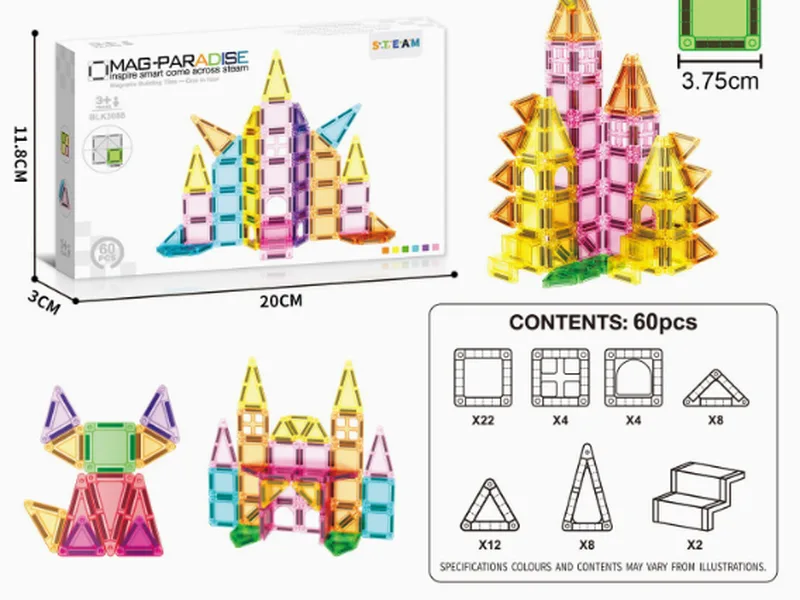
Mag Paradise - 60PCS Magnetic Tiles Set
MBP-007 · Use exact counted shapes from the received sample; the catalog record does not replace the inspection record.
View product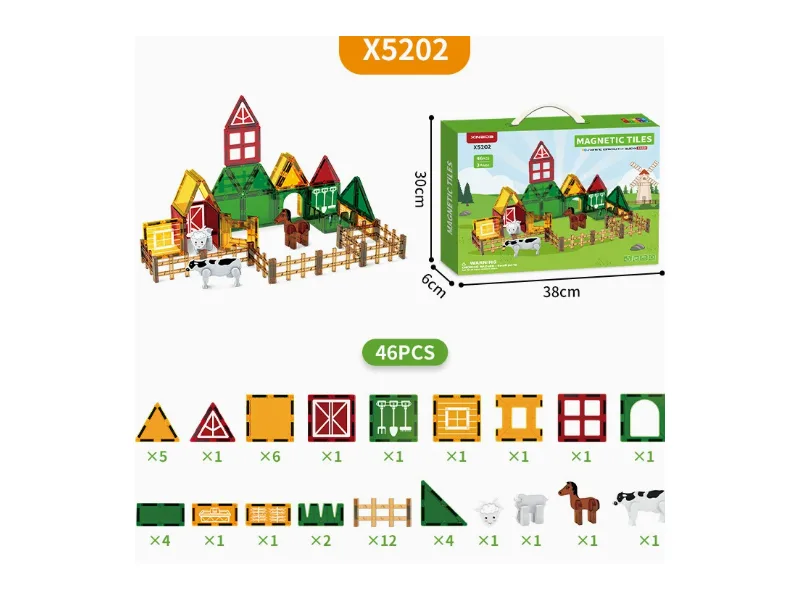
46PCS Farm Magnetic Tiles Set
MBP-016 · A themed reference may contain different shapes or accessories; define the tile groups from the actual sample.
View productCreate matched comparison groups
Put squares with squares and each triangle type with the same triangle type. Number pieces with removable labels or a separate photo map. Choose reference pieces only after a first pass; do not decide that one piece is “good” because it feels strongest.
Keep the contact edge and orientation consistent. Rotate the same pair and repeat the connection. Then cross-pair each suspected outlier with more than one reference piece. This helps separate a one-off pairing effect from a piece that repeatedly behaves differently.
Use a repeatable observation sequence
- Place two like shapes on the same clean, flat surface.
- Bring the same edges together from a similar short distance without snapping or throwing pieces.
- Observe alignment, whether the connection occurs, whether it stays connected under the same gentle handling and whether it separates unexpectedly.
- Repeat the pairing in the same orientation, then rotate and repeat.
- Cross-pair each piece with labelled references from the same shape group.
- Record facts such as “separated during the same lift” rather than uncalibrated labels such as “weak magnet.”
Separate four types of finding
| Finding | Record | Do not conclude |
|---|---|---|
| Connection variation | Piece IDs, edge, orientation, repeat count and observed behavior | A quantified magnetic force |
| Alignment variation | Gap, offset or difficulty seating the same edges | The internal cause without investigation |
| Housing concern | Visible crack, opening, deformation or loose sound | Compliance based on a photo |
| Shape mismatch | Different geometry or edge length used in the comparison | That two unlike shapes should feel identical |
Escalate an outlier with evidence
Photograph the full set label, the marked pieces and the exact comparison position. Save a short video if the behavior depends on motion. Ask the supplier to confirm whether the pieces belong to the same model and sample version, investigate the cause and state the proposed disposition. Keep the sample until the finding closes.
Connection consistency is only one sample-review field. It does not replace visual enclosure inspection, component counting, packaging approval, age grading, warnings or model-specific compliance review.
SKU/sample reference: [ ]. Shape group: [ ]. Piece IDs: [ ]. Edge/orientation: [ ]. Repetitions: [ ]. Reference pieces: [ ]. Factual observation: [ ]. Photo/video file: [ ]. Supplier response: [ ]. Decision—approve, hold, replace or investigate: [ ]. Owner/date: [ ].
FAQ
Can hand-feel alone prove magnetic strength?
No. Hand-feel can reveal comparative outliers in a controlled sample review, but it is not a calibrated measurement or a substitute for applicable technical and test evidence.
Should different tile shapes be compared as one group?
No. Compare like with like first because edge length, geometry and connection position can differ by shape.
What should happen when one pair feels different?
Label the pieces, repeat the same pairing and orientation, cross-pair them with reference pieces, photograph the record and ask the supplier to investigate before approval.
Pair this procedure with the complete home-set sample checklist and the magnet enclosure and retention questions. Ask MagBlockPro to confirm the sample reference before review.